
🐸 Pacman Frog Morphs: Color Variants and Genetics
A Guide to the Most Popular Pacman Frog Colors and Their Origins
Pacman Frog Morphs - At a Glance
Pacman frog morphs are selectively bred color variations such as albino, green, strawberry, and fantasy. These morphs are the result of genetic combinations that affect pigment production. Learn about the most popular morphs, their genetics, and what makes each one unique in appearance and care.
Pacman frogs aren’t just famous for their wide mouths and aggressive appetites—they also come in a rainbow of vibrant color morphs. Thanks to selective breeding, today’s keepers can choose from a variety of striking colors, patterns, and even hybrid morphs that didn’t exist in the wild.
In this guide, we’ll walk through:
- The most popular Pacman frog morphs
- Basic color genetics behind each type
- Whether different morphs require different care
- How morphs are created through responsible breeding
- Let’s dive into the wonderful world of Pacman frog color morphs and what makes each one special.
What Is a Morph?
In the exotic pet world, a morph is a variation in color, pattern, or genetics that differs from the wild type.
Pacman frog morphs are created through selective breeding, where frogs with specific traits are paired over generations to develop and enhance those traits.
🧬 Morphs are about color and pattern—not species. Most pet morphs come from Ceratophrys cranwelli.
Most Popular Pacman Frog Morphs
Here are some of the most widely available and visually distinct morphs
1. Albino Pacman Frog
Color: Pale yellow, peach, or orange with red eyes
Genetics: Lacks dark pigmentation due to a recessive albino gene
Light-sensitive—may prefer dimmer lighting
Very popular among beginners
Color may deepen slightly with age
2. Green/Classic (Wild Type)
Color: Bright green and brown camouflage pattern
Genetics: Natural coloration seen in wild C. cranwelli and C. ornata
Excellent for naturalistic setups
Often the hardiest and most affordable
3. Strawberry Pacman Frog
Color: Soft pink, red, or salmon tones with cream markings
Genetics: Result of albino line breeding to enhance red pigmentation
Eye-catching but sensitive to light
Similar care to albinos
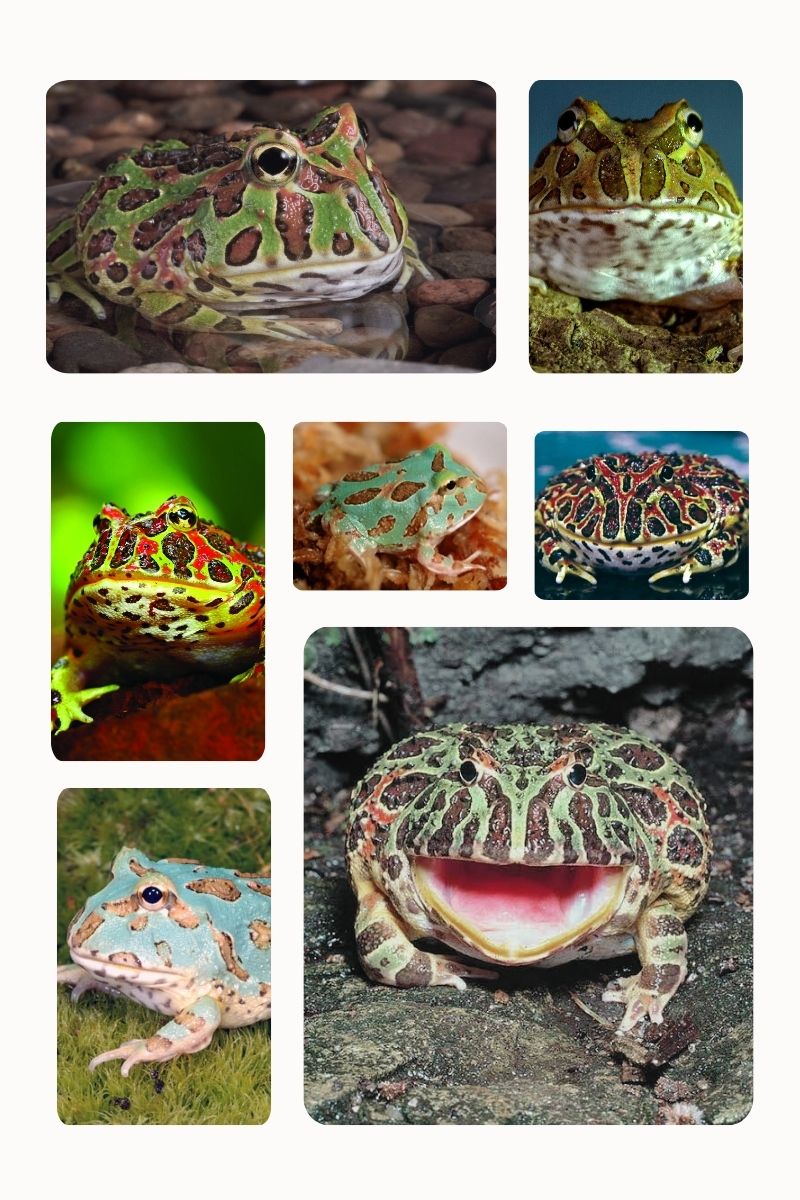
4. Fantasy Pacman Frog
Color: Mixed hues of green, blue, red, and brown with wild-style patterns
Genetics: A hybrid between C. cranwelli and C. cornuta
Often has a horned, exaggerated face
Some may grow larger than standard morphs
Not true morphs—technically hybrids
5. Blue Pacman Frog
Color: Teal-blue to bluish-green (often turns green with age)
Genetics: Selectively bred from green lines; not true “blue” pigmentation
Popular but controversial—color may fade over time
Care is the same as other morphs
6. Chocolate or Brown Morph
Color: Deep brown with cream patterns
Genetics: Possibly related to high-melanin line breeding
Less common but beautiful and naturalistic
Great for bioactive or forest-style enclosures
Understanding Pacman Frog Genetics
While frog genetics isn’t fully mapped, morphs generally follow dominant and recessive inheritance, similar to snakes and reptiles.
Albino is recessive, meaning both parents must carry the gene
Strawberry and blue are selectively bred from albino and green lines
Fantasy frogs are hybrids and cannot be ethically bred further
Hybrid breeding (like fantasy frogs) should only be done by professionals due to limited fertility and ethical concerns.
Do Different Morphs Require Different Care?
Generally, no—but there are some small considerations
| Morph Type | Special Consideration |
|---|---|
| Albino/Strawberry | Light sensitivity—use low-light setups |
| Fantasy | May grow larger—need bigger enclosure |
| Blue | May fade with age—manage expectations |
| All Morphs | Require same heat, humidity, substrate |

Are Some Morphs More Aggressive?
No. Behavior is not tied to color morphs.
All Pacman frogs—regardless of morph—are territorial, food-aggressive, and solitary. Color does not affect temperament.
Are Morphs More Fragile?
Some lighter morphs (like albinos and strawberries) may be:
Slightly more sensitive to light
More prone to visual stress in bright tanks
Prone to fading if exposed to excessive UV or poor diet
That said, all morphs can thrive with proper husbandry.
Choosing a Morph: Tips for New Owners
Don’t choose solely based on color—know what you’re committing to
Research breeders and avoid unethically bred hybrids
Be wary of photoshopped or enhanced colors online
Ask for current photos or in-person inspection before purchasing
Morph Comparison Table
| Morph | Color Description | Light Sensitivity | Common? | Notes |
|---|---|---|---|---|
| Green | Green/brown camo | Low | Very | Closest to wild appearance |
| Albino | Yellow/orange/red eyes | High | Very | Classic and easy to find |
| Strawberry | Pink/salmon/red | High | Common | Derived from albino lines |
| Fantasy | Mixed colors, horned | Medium | Common | Hybrid—larger size possible |
| Blue | Teal/blue-green | Medium | Uncommon | Color may fade |
| Chocolate | Deep brown/cream | Low | Rare | Great for natural displays |
Final Thoughts
Pacman frog morphs add color and variety to this already fascinating species. From bold albinos to subtle chocolates, each morph offers its own visual appeal—but all require the same dedicated care. If you’re new to the hobby, start with a hardy morph like green or albino before exploring more unique varieties. No matter the color, Pacman frogs are beautiful, bold, and endlessly entertaining.
FAQ: Pacman Frog Morphs
Q: Are blue Pacman frogs really blue?
A: They appear blue as juveniles but often turn green as they mature.
Q: Are morphs more expensive?
A: Yes, especially rare or trending morphs like strawberry or blue.
Q: Can I breed different morphs together?
A: Only with experience and ethical standards. Hybrid breeding (like fantasy frogs) should be left to professionals.
👉 Want more care advice, housing ideas, and morph updates? Explore the full Pacman Frog Library for articles, care sheets, and printable guides!